
Inside Haskell County Property Tax Records
Two Haskell County offices split the work. The Appraiser assigns each parcel its classification and appraised values, while the Treasurer takes the certified tax roll, mails statements, posts payments, and tracks delinquency. Each office answers a different question. A complete review pairs the appraisal record with the current tax account.
| Recorded item | Meaning for the parcel | Official source |
|---|---|---|
| Owner and tax address | Name and mailing destination carried on the appraisal record | County Appraiser |
| Land, improvement, and total appraised value | The appraiser's component values before the class assessment factor | County Appraiser |
| Classification and taxing unit | Property class and the jurisdictions used in taxation | County Appraiser |
| Assessed value | Appraised value multiplied by the applicable Kansas assessment rate | County appraisal roll |
| Statement, payments, and delinquency | Amount billed, payment status, and any unpaid balance | County Treasurer |
K.S.A. 79-1459 lays out the core inventory a parcel record carries: classification, taxing unit, legal description, and building details. Construction date sits in there too, along with land and improvement values listed separately.
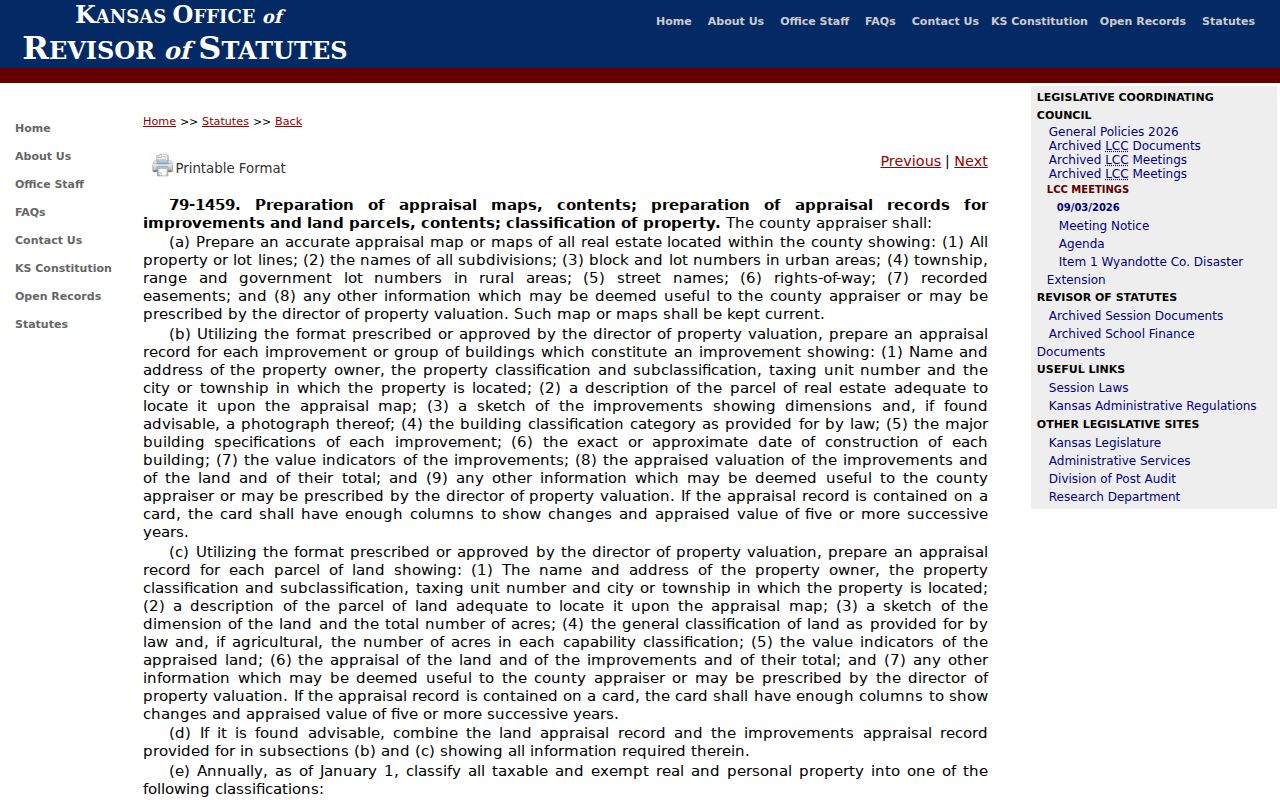
That statute view anchors a local request to the fields the state requires. What it does not do is translate a tax statement into a sale-price report. The assessed number reflects the tax roll, not what the parcel would likely bring on the open market.
Appraised Value Is Not Haskell's Taxable Number
Kansas never taxes the appraised figure directly. A sequence comes first. Per the Department of Revenue formula, appraised value times the assessment rate yields assessed value, and assessed value times the mill levy, divided by 1,000, yields the tax. Read each number at its own stage. That habit clears up the apparent mismatch between a parcel card and a bill.
- Appraised value
- The appraiser's estimate before the statutory class rate is applied.
- Assessed value
- The class-adjusted amount to which the levy applies.
- Mill levy
- Tax dollars per $1,000 of assessed value.
- Exemption
- A legally authorized removal or reduction of taxable property; it is not inferred merely from a mailing address.
- Tax lien
- The public claim arising when real-property taxes remain unpaid.
The KDOR tax calculator page illustrates the sequence.
Each part deserves its own line. State guidance says values, classes, levies, and payment status belong to one tax year, never mixed across cycles.
Kansas Class Rates Change the Haskell Calculation
Class matters as much as dollars. Kansas sets the residential assessment rate at 11.5%. Vacant lots sit at 12%. Commercial and industrial real property, by contrast, carries a 25% assessment rate. Agricultural land is valued by use and assessed at 30%. Agricultural improvements use 25%. A farm residence uses the residential 11.5% rate. The state classification guide is the appropriate source for current category rules.
A farm account can hold land and structures taxed differently. Oil, gas, minerals, utilities, and other classes make countywide averages poor shortcuts for one Haskell County home. Confirm the class before applying any rate.
Note: Agricultural land value reflects use under Kansas rules, so it should not be read as an ordinary residential market estimate.
The Land-and-Improvement Split on a Haskell Record
Kansas law requires the appraisal record to separate land value, improvement value, and a total appraised figure. Many cards add an improvement sketch or photo, building class, major specifications, and a construction date. Those pieces explain changes. A land adjustment, a new structure, a corrected size, or a reclassification can move the total without hinting at a comparable sale.
Ask the Haskell County Appraiser for the parcel card. Cynthia Wellbrock can be reached at 620-675-6289 or P.O. Box 518, Sublette, KS 67877. Give a parcel number, legal description, or address. Ask for any notices tied to the parcel too. The county publishes no online parcel search, so the dependable channels are phone, mail, and the courthouse counter. That beats guessing at a portal that does not exist.
Retrieve a Haskell County Tax Account
Start with a tax statement when you have one. Its account or parcel key beats a street spelling. The statewide payment application moves money, but it is not a public parcel finder.
- Identify the address, owner name, legal description, or parcel/account number from the appraisal card or statement.
- Contact the Appraiser for classification, taxing unit, and land/improvement/total values for the chosen tax year.
- Contact the Treasurer for the statement, payment history, current balance, and any delinquent status for the same account and year.
- Use Kansas Property Tax Payments only when the county statement and a payment method are already in hand.
- If ordinary channels do not supply an existing record, send a narrow Kansas Open Records Act request naming the parcel, record series, years, and preferred electronic format.
The Treasurer listing names Karmin Whaler at 620-675-2265, P.O. Box 578, 300 S. Inman, Sublette. Hours run 8:00 a.m. to 4:00 p.m., Monday through Friday. The office stays open through lunch, but the door locks at 3:30 p.m. so transactions finish by 4:00. Confirm current details before traveling.
Haskell Treasurer Channels Beyond the Web
The Kansas County Treasurers Association directory spells out Haskell County payment options. Full and partial payments are accepted. Credit cards work by phone or internet, online tax payments are supported, and partial payments apply to delinquent taxes too. The directory lists no Haskell search fields. Ask the office directly. Staff can often locate an account by parcel number, tax-statement account number, legal description, owner name, or address.
Mail requests should name the tax years. Say whether the answer should be a statement, receipt, payment history, delinquency record, or certified copy. Bring the statement or legal description if you can. Under KORA guidance, a written request may ask for electronic copies, a fee estimate, and the legal citation for withheld material; the office may charge reasonable actual costs and need not create a new report.
Portal gap. No official public Haskell tax-account search interface was verified, so a failed web search is not evidence that the record does not exist.
Haskell's Unusual Property-Class Mix
Numbers need context in Haskell County. The state's 2024 summary puts oil and gas at $49,837,888. That is 45.43% of the county value summary. Residential sits at 17.33%. Commercial real estate adds another 14.42%. Those are class shares for the county, not a price index. They are not an estimate for any single parcel.
The KDOR county property-data hub helps place a parcel's class in that county context. Then go back to the appraisal card. A house, an agricultural tract, a mineral interest, and a commercial parcel differ. Each class follows its own valuation rules. That is why Haskell property tax records deserve account-by-account reading rather than countywide averages.
Delinquent Haskell Taxes and the Sale-Notice Trail
An unpaid account takes more than a balance check. Ask the Treasurer for the delinquent years, any interest, and any costs. Ask about payment arrangements too. Find out whether the parcel has entered a publication or sale process. The Sheriff may hold foreclosure-sale notices. The county posts no online sale list. Call 620-675-2289 and watch the public notices in the Haskell County News.
Kansas statutes set the trail. K.S.A. 79-2302, 79-2303, and 79-2306 require delinquent real-estate lists to be published. That includes a three-consecutive-week sequence beginning around August under the statutory schedule. Publication is a dated procedural record, though, not a substitute for the Treasurer's current account. Confirm redemption, payment, and sale status directly before drawing any conclusion.
Note: A delinquent-list appearance reflects a particular publication date; later payment or court action can change the account's status.
Haskell Taxing Units Behind the Bill
One tax statement can pull from many jurisdictions. County, city, township, school, and other taxing units may all appear on the same bill. So can recreation, cemetery, and hospital units. The Kansas Department of Administration's 2026 municipal-budget library covers Haskell County. It also covers Satanta, Sublette, the townships, recreation commissions, the cemetery district, and the hospital district. Those files show adopted budgets and revenue-neutral-rate actions in context.
Budgets explain the public entities behind a levy. They do not set a parcel's classification or prove a bill was paid. Match the taxing-unit number on the appraisal record to the jurisdictions on the statement. Then ask the County Clerk or Treasurer about any unexplained line.
Contest a Haskell County Appraisal on Time
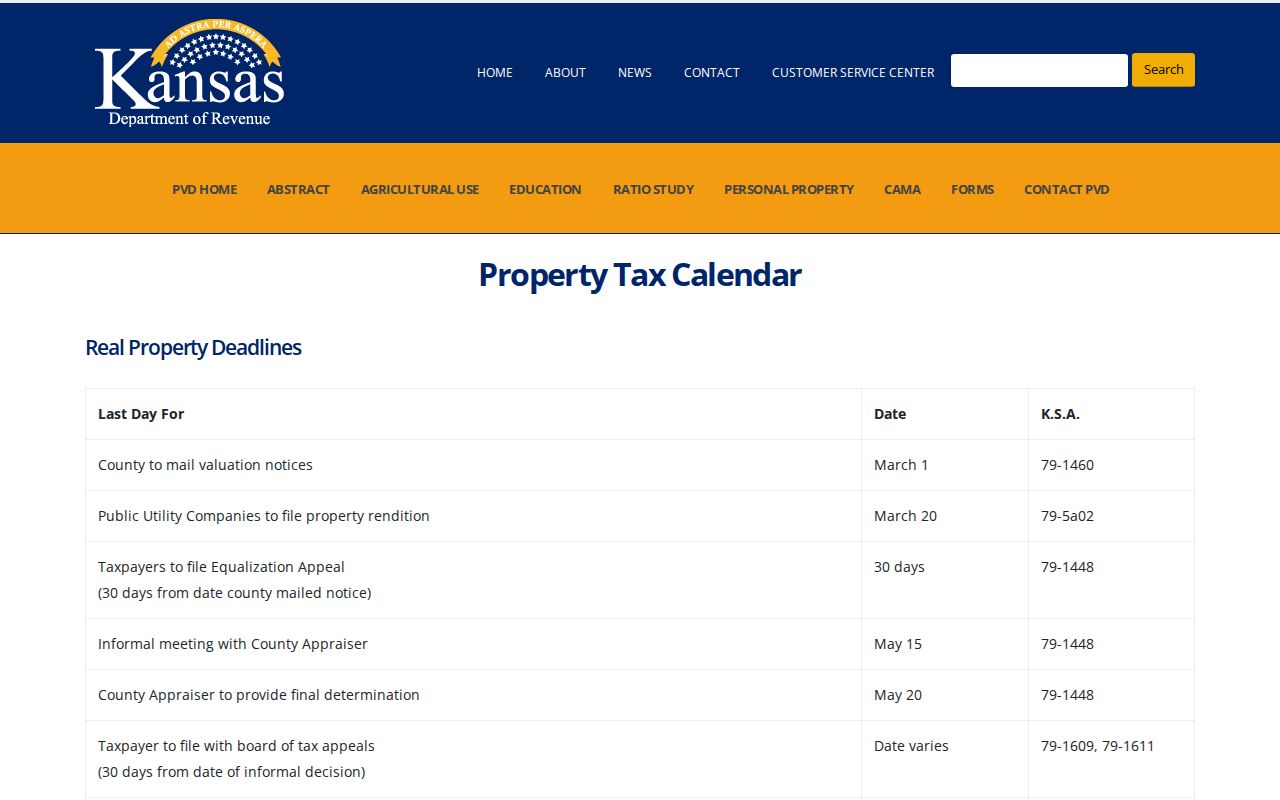
Timing decides most appeals. The Kansas property-tax calendar gives an owner 30 days from the mailing date to contact the county appraiser about a notice of value. The first step is an informal meeting with the Appraiser. Bring whatever speaks to the disputed field: the notice, parcel card, photographs, measurements, repair evidence, comparable sales, or classification material.
Still disputed after the informal meeting? Follow the notice's instructions for the next appeal level and keep every mailing and deadline. The Kansas Board of Tax Appeals publishes the forms and appeal pathways.
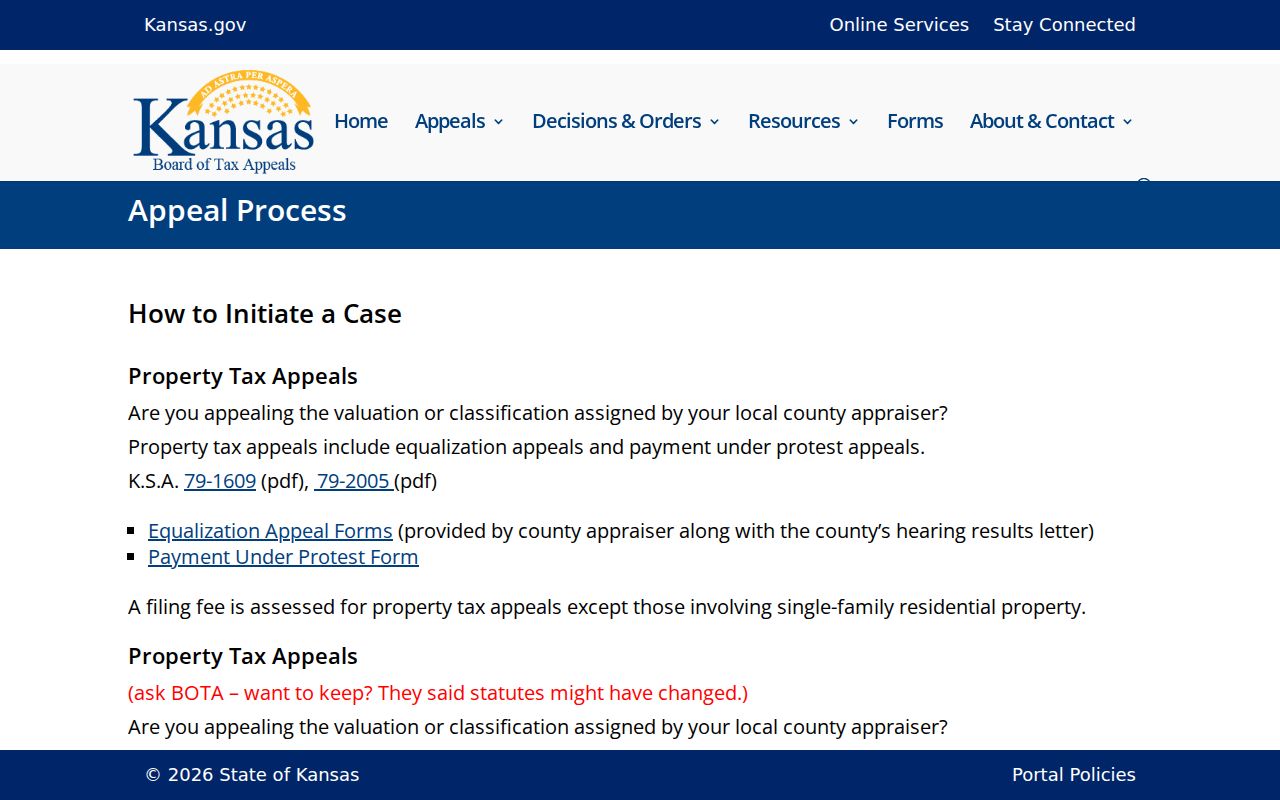
The BOTA page lays out the formal appeal routes and notes a filing-fee exemption for single-family residential property. Payment under protest is a separate track. It generally cannot be combined with an equalization appeal for the same property and year.
Thirty-day window. Measure the Haskell appeal period from the notice's mailing date, contact the County Appraiser promptly, and keep proof of filing.