
Compare Haskell County Property Value Figures
The Appraiser keeps each parcel's appraisal record. The Register of Deeds holds the deeds. Conveyances there may state consideration, so read the label and the year beside every figure before comparing one source with another.
| Figure | Meaning in the record | Best source |
|---|---|---|
| Appraised value | The county's estimate produced for the annual appraisal roll | Haskell County Appraiser |
| Assessed value | Appraised value multiplied by the Kansas rate for the property class | Appraisal record and tax statement |
| Sale consideration | An amount stated in a transfer document, when the instrument reports it | Recorded deed |
| Land and improvements | Separate components that combine into the total appraised amount | Appraisal card |
Kansas assigns assessment rates by class. No single rate covers every parcel in the state. Residential property is assessed at 11.5 percent, vacant land at 12 percent, and commercial and industrial real property at 25 percent. Agricultural land carries 30 percent. It may also be valued by use rather than by market, so classification is usually the reason two Haskell County property value records refuse to reconcile.
Haskell Appraisals Split Land and Improvements
Kansas appraisal-map law describes a rich record. It may carry the owner's name and address, the property class, a locating description, sketches, photographs, and separate land, improvement, and total appraised values. The county offers no public layout of these fields, so request them by name.
The land and improvement split can explain change. A rising improvement component may follow new construction or a corrected sketch. A land change may reflect a different appraisal judgment. Neither movement alone proves a sale. Match the parcel number or legal description and the assessment year before concluding anything about a transfer.
Class Changes Haskell County Assessed Value
The assessment rate is a class factor. It is not the tax rate. Multiply the county's appraised amount by the proper Kansas class rate to reach the assessed value, and local mill levies are applied only after that step.
Residential
Confirm residential classification before applying the 11.5 percent rate.
Commercial
Commercial and industrial real property uses a 25 percent rate. Two parcels with equal appraised amounts can therefore carry very different assessments.
Vacant and agricultural land get separate treatment. Their rates differ from residential. Agricultural use valuation can make a rural tract's tax figure look unlike a simple market estimate, so ask the Appraiser about the classification and any change shown on the notice.
Haskell County's Value Mix Is Context
The Kansas Department of Revenue's 2024 county summary shows an unusual tax base. Oil and gas made up 45.43 percent of value. Residential property followed at 17.33 percent. Commercial real estate came in at 14.42 percent. Public utilities, agricultural land, and agricultural improvements filled out the remaining reported shares.
Countywide shares are context, not a price estimate. They price nothing in Sublette or Satanta. Nor do they establish a city median, a parcel's class, or a likely sale price. A county total shaped by mineral property should never serve as a residential comparable, which is a caution worth keeping for any Haskell County property value question.
For the state formula that moves from value and class toward a tax estimate, the Kansas Department of Revenue property-tax calculator shows each step.
The calculator gives statewide context only. The Haskell County appraisal card and the tax statement remain the sources for a parcel's actual figures.
Look Up Haskell County Property Value
Haskell County offers no working public appraisal search online. Start at the county Appraiser's official page. When the page does not expose a usable search, use the office's request route. A narrow request naming the parcel is the one most likely to return the right card.
- Give the Haskell County Appraiser the situs address and any known parcel or legal description.
- Ask for the class, appraisal year, land value, improvement value, total appraised value, and assessed value.
- Confirm whether the roll is current and whether a recent transfer or improvement is waiting for an update.
- Use the latest recorded deed only as a separate sale or transfer reference, not as the assessed figure.
- Appraised value
- The county's mass-appraisal estimate before the class rate is applied.
- Assessed value
- The amount produced after the Kansas class assessment factor is applied.
- Consideration
- A transfer amount stated in a deed, when available, rather than the county's estimate.
Haskell County Notices Set the Valuation Calendar
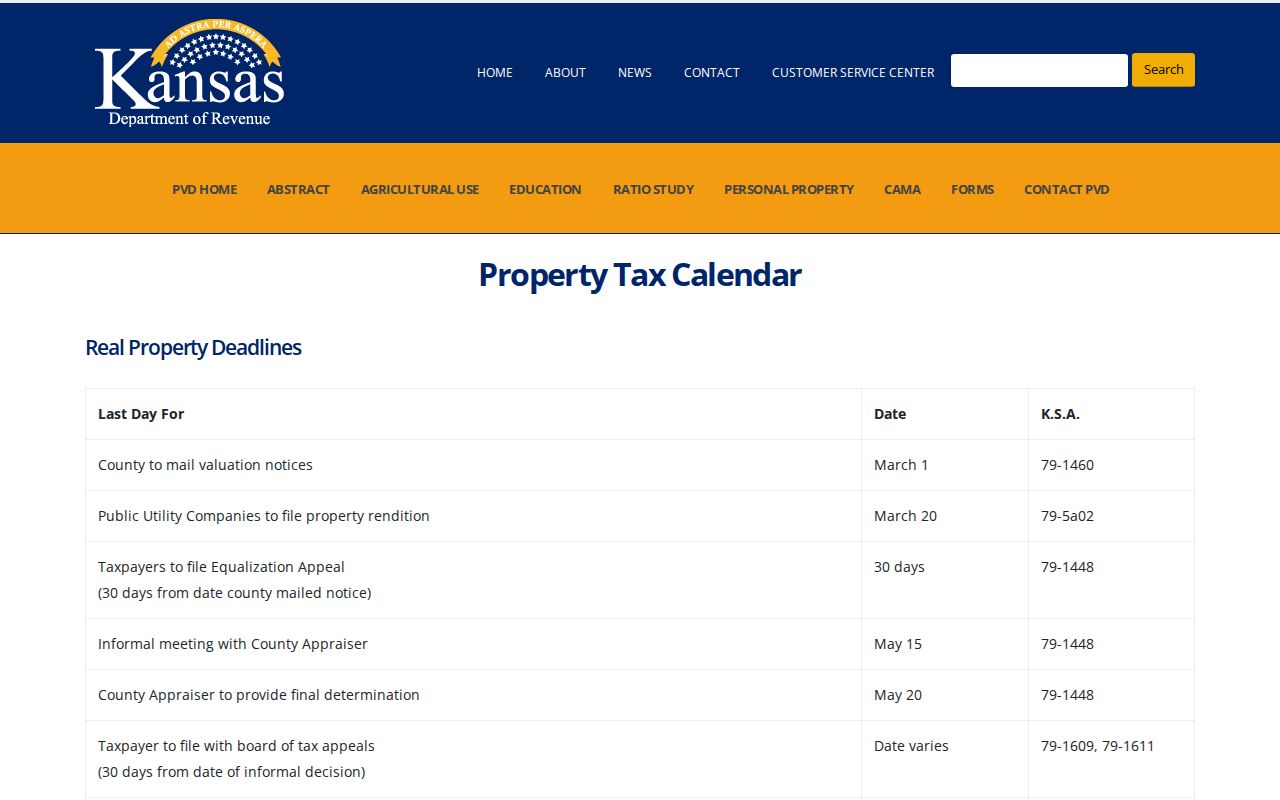
Kansas runs its property-tax calendar on fixed dates. Notices of value go out March 1. An equalization appeal is due within 30 days. Informal meetings happen around May 15, final determinations are due May 20, and county certification follows June 1.
Those dates explain why one document's figure may not match a later certified roll. Keep the notice and the final determination together. For bill mechanics, exemptions, or a challenge route, the Haskell County property tax records guide lays out the next step.
Haskell County Deeds May Show Price
The Register of Deeds records land transfers. A deed may state consideration. It may also supply a reference to check against another transfer record. Not every conveyance is an open-market sale, and gifts, estate transfers, trust conveyances, and quitclaim deeds all call for care.
Haskell County publishes no official online deed images. Identify the transfer first. Use the grantor, grantee, recording date, deed type, legal description, and book/page or instrument number. Then visit or call the Register of Deeds at the courthouse, or file a narrow Kansas Open Records Act request for an existing non-exempt record.
Haskell County Tax Uses Another Formula
Property value is only half of the local tax math. Kansas starts with appraised value and applies an assessment rate. It then multiplies the assessed value by the mill levy and divides by 1,000. The residential rate sits at 11.5 percent. That figure is not a tax rate on market value. So the final bill is far smaller than 11.5 percent of what a Haskell County home would sell for.
For the real number, trust the Treasurer's statement. It shows the billed amount, payment history, and any delinquency. A calculator can check arithmetic. But it cannot confirm the right class, exemption, levy, or current balance. Compare figures from the same tax year throughout, or the comparison means nothing.
When Haskell County Appraisal Access Fails
The county appraiser's site does not always load. No public owner-name search stands in its place. That gap is technical, not legal. The record itself stays open. Reach the Appraiser at 620-675-6289, P.O. Box 518, Sublette, Kansas 67877. Ask directly for the appraisal card, either for inspection or as an electronic copy.
If a plain request stalls, the Kansas Open Records Act offers a firmer path. File a written KORA request naming the address, the parcel number, the record years, and the exact fields wanted. Ask for electronic delivery at actual cost. A fee estimate up front avoids surprises later.
The official Haskell County Appraiser page remains the agency reference. Its public interface is sometimes unavailable.
Match Haskell Values to Parcel Descriptions
A street address works as a search key. The legal description is what binds appraisal, deed, plat, and tax records together over time. Haskell County property may be described by a city block and lot, an addition, a tract, or by section, township, and range. Mailing addresses can differ from situs addresses, too.
Before comparing two years, confirm both records cover the same parcel boundaries. A lot split, plat correction, vacation, or combined tract can manufacture an apparent value change that is really a change in what was measured. The Appraiser and Register of Deeds should agree on the locating description used for any comparison.
Limits of Haskell County Assessed Value
A Haskell County assessed value belongs to a mass-appraisal and tax system, nothing more. It cannot promise what a buyer will pay. It cannot establish a boundary or prove title. It does not replace an appraisal prepared for a specific transaction. It may even predate a sale. Or it may predate a physical change to the property.
Value is not price. Treat the assessor's figure as a dated public record, not a forecast of a property's sale price or a private appraisal.
For solid due diligence, keep the card's year and class, pull the relevant deed, and document any permit or plat change. Verification matters more than forcing every source to match.